Ratebeat Logo

Our Blog

Insights That Move You Forward

Read the latest expert advice and in-depth articles to stay informed and empowered on your path to homeownership.

How Soon Can You Get a HELOC After Buying a House?
July 19, 2026
12 min read
HELOC

How Soon Can You Get a HELOC After Buying a House?

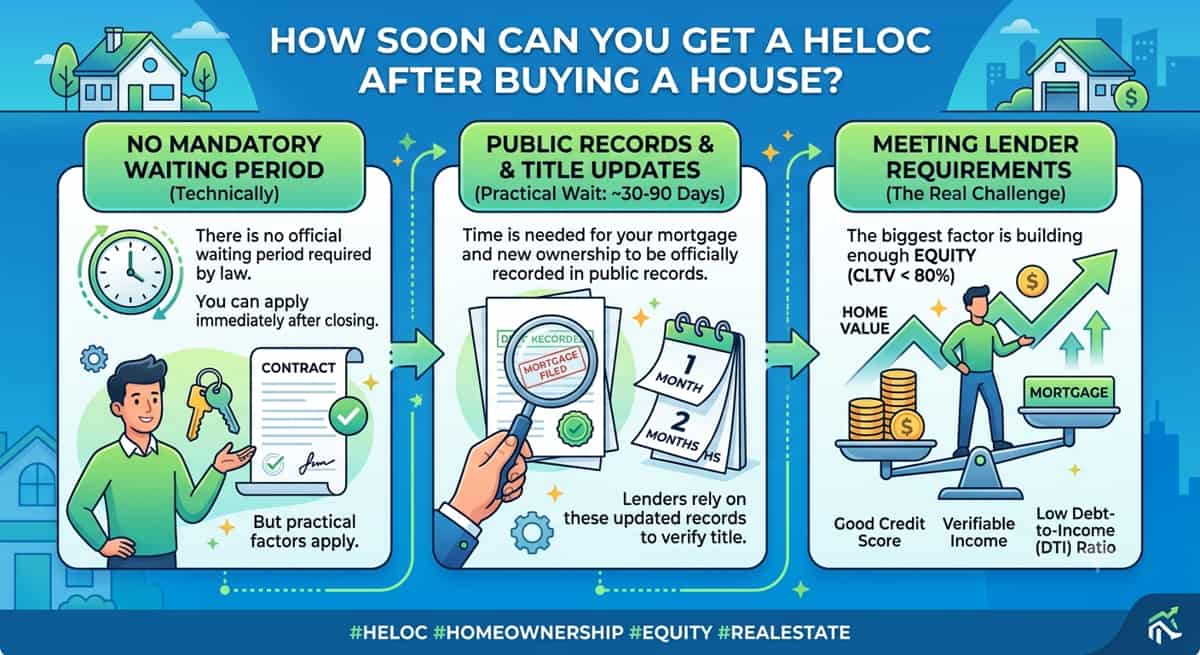
Most lenders require waiting 6 to 12 months after buying a home to get a HELOC. This "seasoning period" ensures stable home value and reliable mortgage payments. To qualify sooner, you need strong credit, low debt-to-income, and at least 15–20% built-in equity from a large down payment.
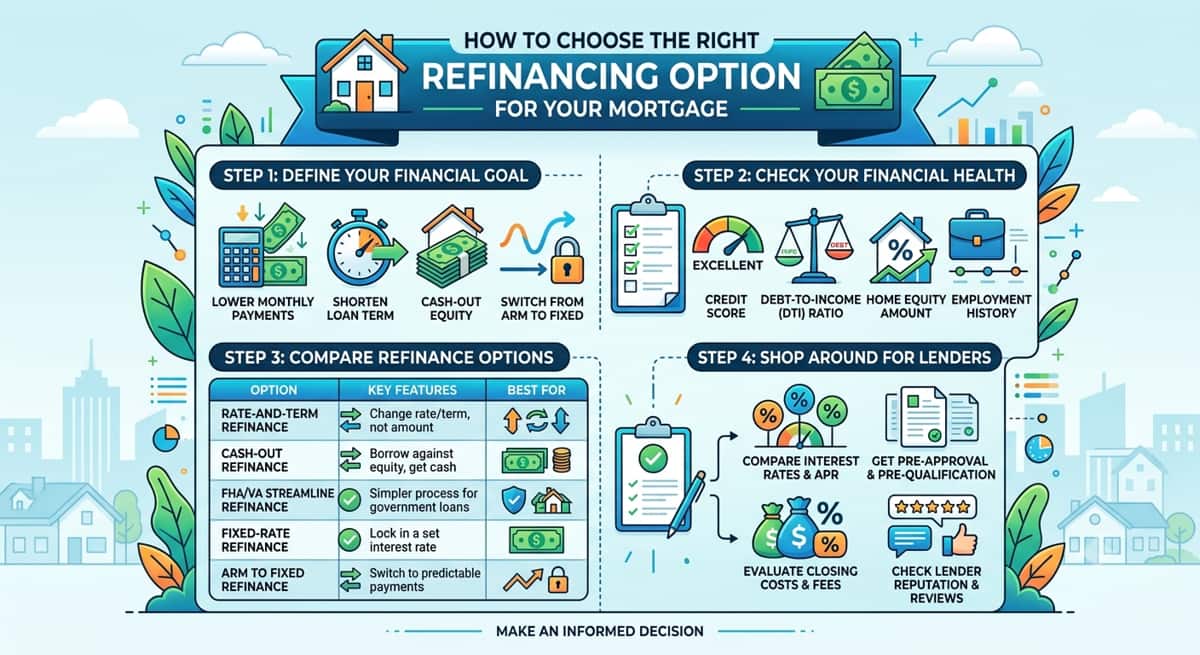
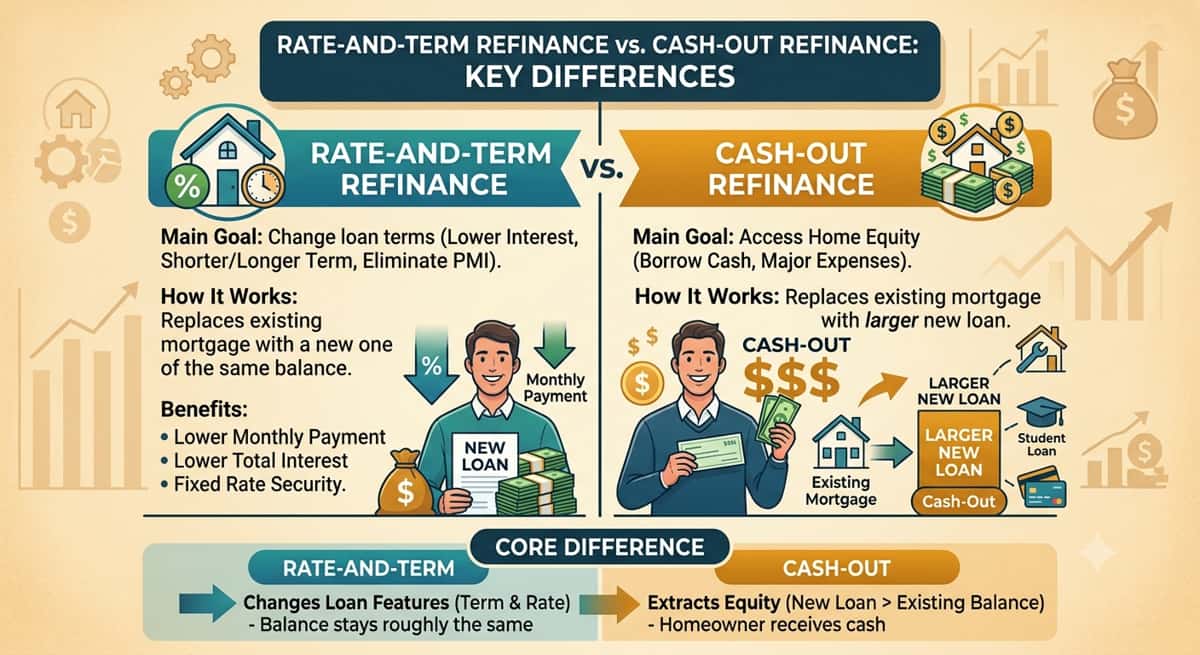
How to Choose the Right Refinancing Option for Your Mortgage
July 18, 2026
12 min read
#RefinancingRefinancing Option

How to Choose the Right Refinancing Option for Your Mortgage

To choose the right mortgage refinance, first define your financial goal—such as lowering payments, shortening your term, or accessing equity. Next, assess your credit score, home equity, and how long you plan to stay in the home. Finally, compare loan types, calculate your break-even point, and shop multiple lenders.

Rate-and-Term Refinance vs. Cash-Out Refinance
July 16, 2026
12 min read
#RefinancingCash-Out Refinance

Rate-and-Term Refinance vs. Cash-Out Refinance

A rate-and-term refinance modifies your mortgage rate or term to lower monthly payments. A cash-out refinance replaces your mortgage with a larger loan, letting you withdraw cash from your equity. Choose based on your goals: saving money versus getting cash.

How to Get the Lowest Mortgage Interest Rate
July 15, 2026
12 min read
15-Year Fixed Rate Mortgage30-Year Fixed-Rate MortgageCash-Out-Refinance

How to Get the Lowest Mortgage Interest Rate

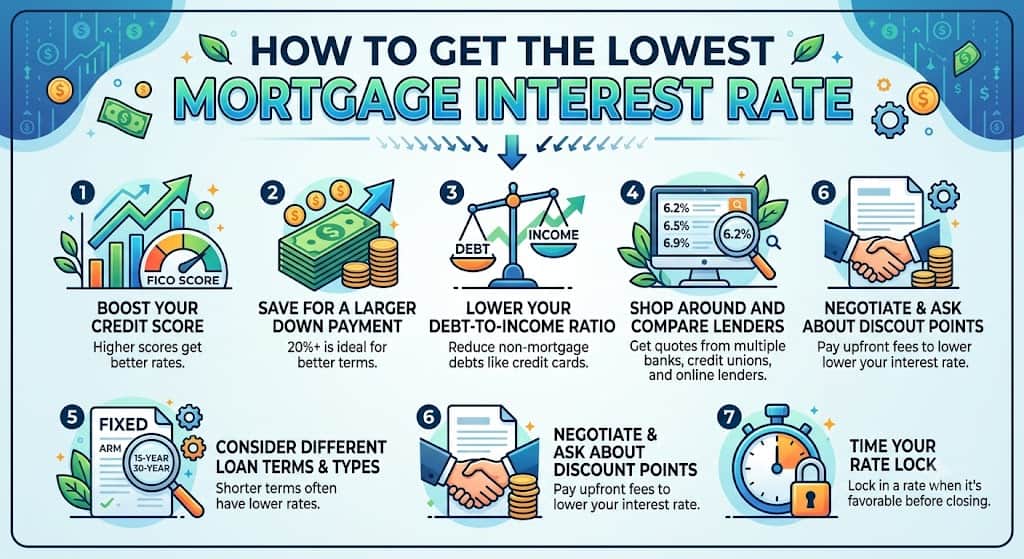
To get the lowest mortgage rate, improve your credit score, lower your debt, and make a larger down payment. Always shop multiple lenders to compare offers, avoid large purchases before closing, and consider working with a mortgage advisor to find wholesale rates that save you money over time.

30-Year Fixed Mortgage vs Adjustable-Rate Mortgage: Which Is Better?
July 14, 2026
11 min read
30-Year Fixed-Rate MortgageAdjustable Rate Mortgage

30-Year Fixed Mortgage vs Adjustable-Rate Mortgage: Which Is Better?

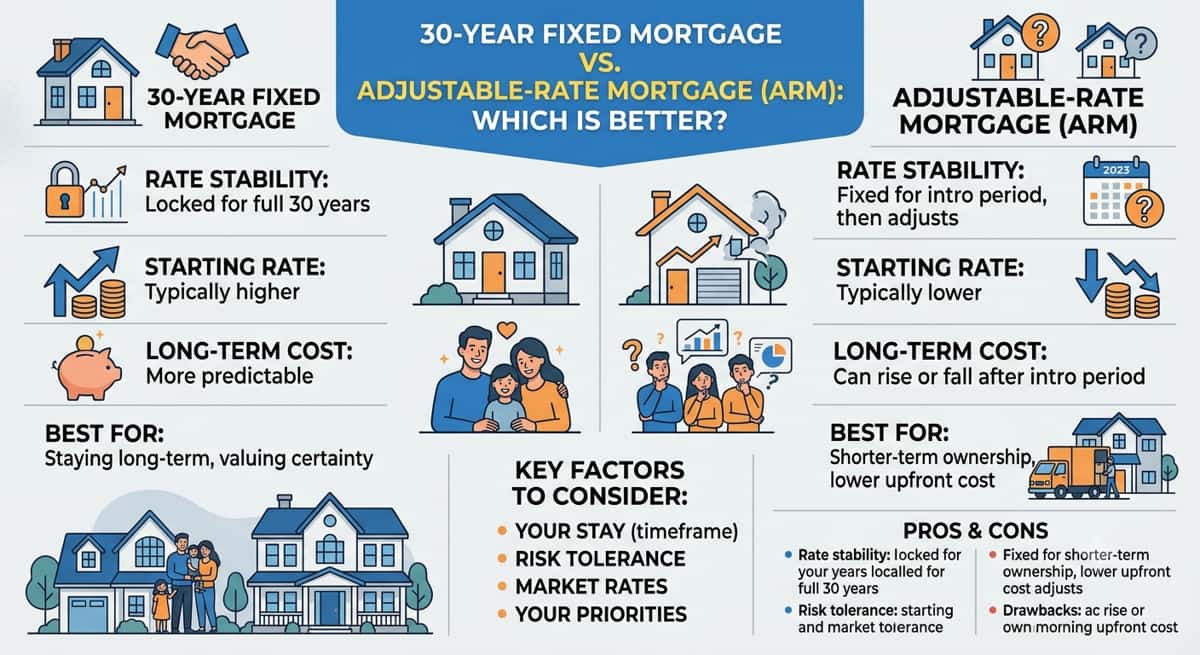
In this blog we compare 30-year fixed-rate mortgages and adjustable-rate mortgages (ARMs). Fixed loans offer lifetime predictability of payments, but higher initial rates. ARMs have lower starting payments, but the risk of future rate hikes. Your time frame and risk tolerance determine the choice, and working with an expert helps you avoid common costly pitfalls.

What Is a 30-Year Fixed-Rate Mortgage and How Does It Work?
July 11, 2026
11 min read
Fixed-Rate Loan30-Year Fixed-Rate Mortgage

What Is a 30-Year Fixed-Rate Mortgage and How Does It Work?

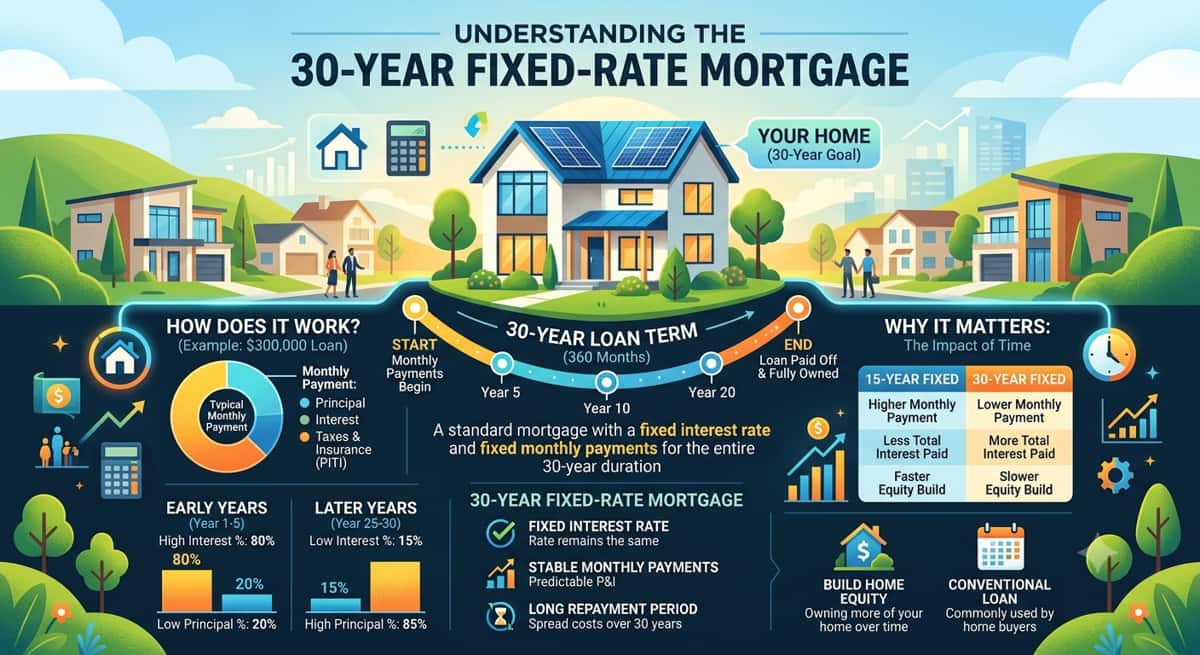
A 30-year fixed-rate mortgage locks in a single interest rate at closing that never changes over the 360-month duration. This ensures that your principal and interest payments remain identical every month, providing budget predictability.

Can You Get a HELOC with Bad Credit? Requirements and Options
July 9, 2026
14 min read
HELOC#CreditScore

Can You Get a HELOC with Bad Credit? Requirements and Options

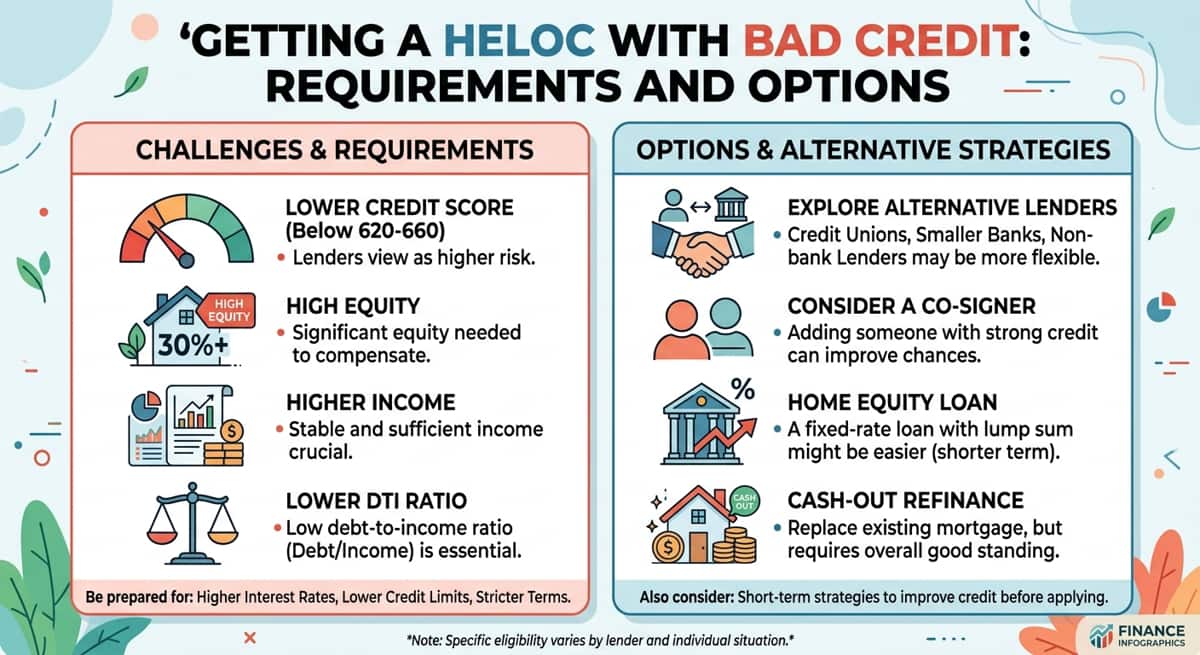
You can get a HELOC with bad credit, but expect higher rates and stricter terms. Because lenders view credit score as just one factor, substantial home equity, stable income, and consistent mortgage payments can help you qualify. To improve your odds, apply through credit unions, portfolio lenders, or consider a co-signer.

Is HELOC Interest Tax Deductible?
July 8, 2026
10 min read
HELOCTax

Is HELOC Interest Tax Deductible?

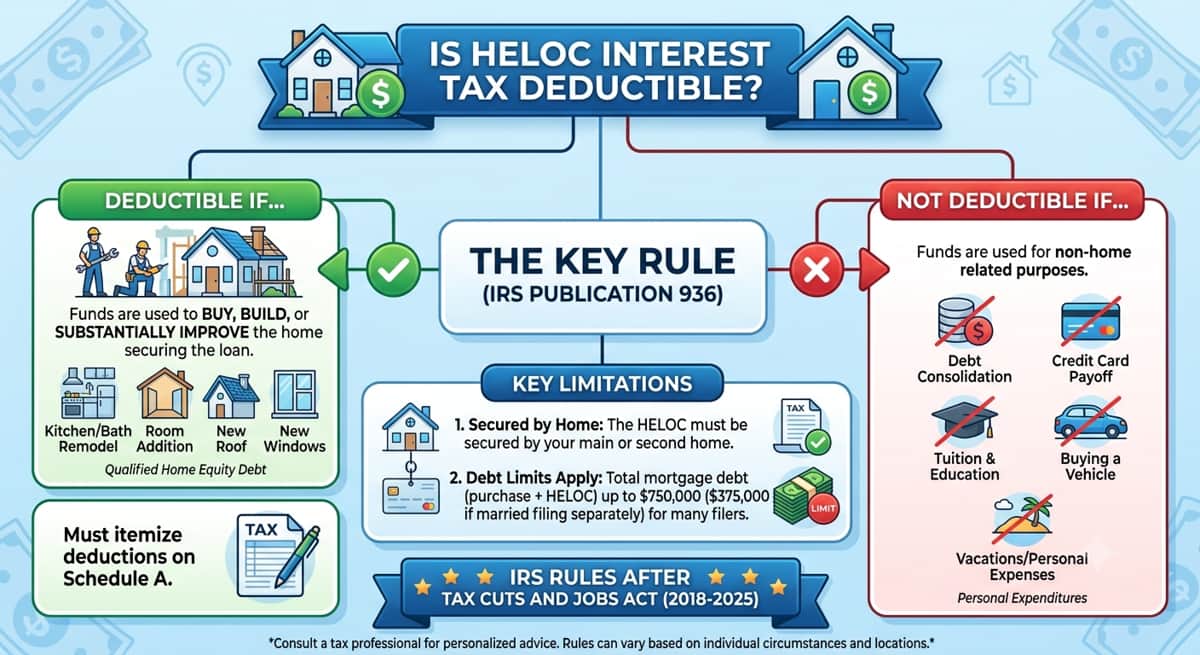
HELOC interest is only tax-deductible if used to buy, build, or substantially improve the home securing the loan. Deductions require itemizing on your tax return and are subject to a combined mortgage debt limit of $750,000. Keep detailed records of all project spending, and never borrow solely for the tax break.

How Can You Minimize Refinance Closing Costs?
July 7, 2026
11 min read
#RefinancingClosing Costs

How Can You Minimize Refinance Closing Costs?

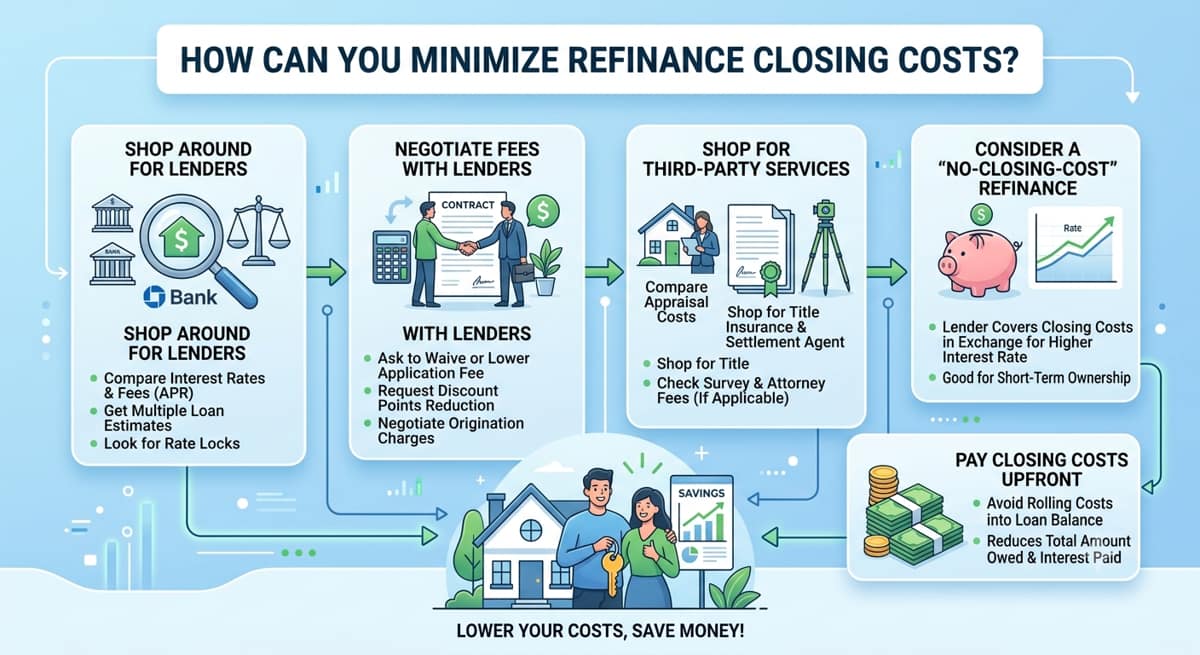
Refinancing lowers mortgage payments but carries closing costs typically between 2% and 6% of the loan amount. You can minimize these upfront expenses by comparing multiple loan estimates, negotiating lender fees, checking for waivers, or choosing a no-closing-cost loan. Always calculate your break-even point to ensure the long-term savings outweigh the fees.

How to Refinance a HELOC: Best Options and Tips
July 6, 2026
13 min read
HELOCCash-Out-Refinance#Refinancing

How to Refinance a HELOC: Best Options and Tips

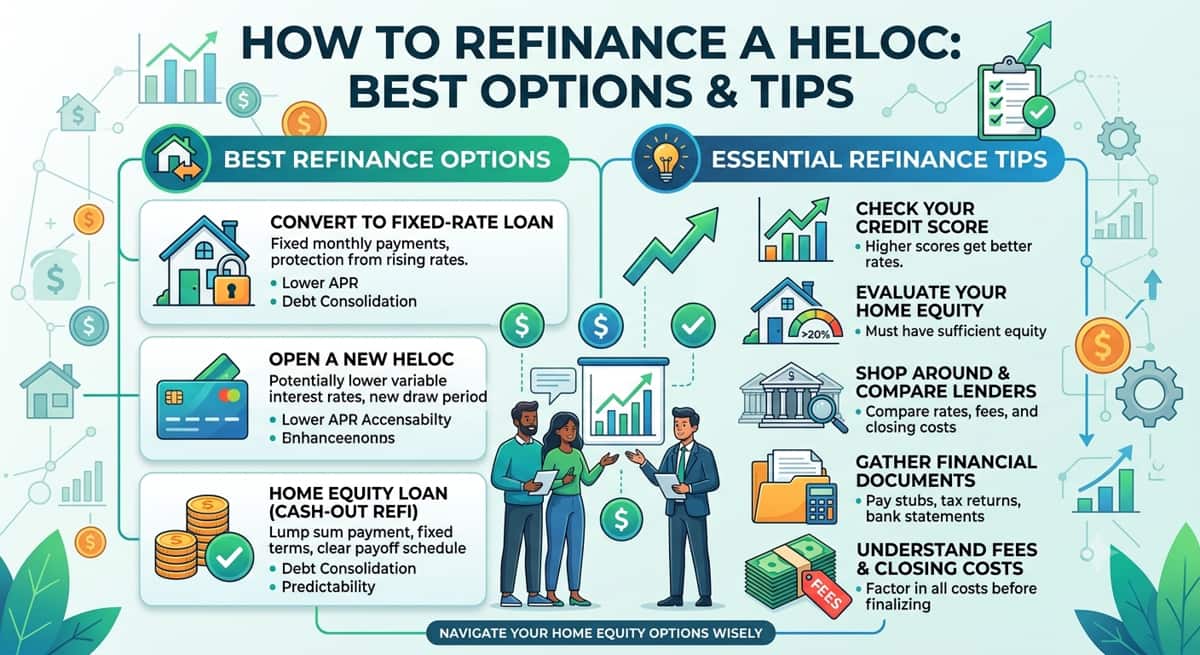
Refinancing a HELOC replaces your current line of credit with a new loan for better terms, like lower payments or predictable fixed rates. Options include a new HELOC, home equity loan, or cash-out refinance. Carefully weigh closing costs against potential savings to choose the best option for your goals.

What Credit Score Do You Need for a HELOC?
July 2, 2026
13 min read
HELOCCredit Score

What Credit Score Do You Need for a HELOC?

Lenders typically require a minimum credit score of 620 to qualify for a HELOC, though scores above 700 unlock the best interest rates. Beyond your credit score, lenders also heavily weigh your home equity, debt-to-income ratio, and income stability. Boosting your score before applying can significantly lower your long-term borrowing costs.

Monthly Payment Differences Between 15-Year and 30-Year Mortgages
July 1, 2026
11 min read
15-Year Fixed Rate Mortgage

Monthly Payment Differences Between 15-Year and 30-Year Mortgages

Choosing between a 15- and 30-year mortgage balances immediate cash flow against long-term savings. The 30-year term offers lower, manageable monthly payments. The 15-year term requires 40–60% higher payments but builds equity twice as fast, secures lower interest rates, and saves hundreds of thousands of dollars in lifetime interest.

What Is a 15-Year Fixed Rate Mortgage and How Does It Work?
June 30, 2026
11 min read
15-Year Fixed Rate MortgageMortgage

What Is a 15-Year Fixed Rate Mortgage and How Does It Work?

A 15-year fixed-rate mortgage trades higher monthly payments for a shorter payoff timeline, building home equity twice as fast as a 30-year loan. It offers lower interest rates and substantial long-term savings, making it ideal for stable budgets or pre-retirees looking to become debt-free sooner, provided they budget for higher monthly costs.

FHA Loan Limits Explained: How Much Can You Borrow?
June 29, 2026
16 min read
FHA

FHA Loan Limits Explained: How Much Can You Borrow?

Is an FHA Loan Worth It? Pros and Cons for Homebuyers
June 28, 2026
13 min read
FHA

Is an FHA Loan Worth It? Pros and Cons for Homebuyers

How Long Does It Take to Get a HELOC?
June 27, 2026
11 min read
HELOC

How Long Does It Take to Get a HELOC?

Getting a HELOC typically takes 2 to 6 weeks. While online lenders utilizing automated valuations can fund in 5 to 15 days, traditional banks often take 4 to 8 weeks. The total timeline depends heavily on the appraisal method, your credit profile, and how quickly you submit financial documentation.

What Is a Cash-Out Refinance and How Does It Work?
June 24, 2026
12 min read
Cash Out Refinance

What Is a Cash-Out Refinance and How Does It Work?

A cash-out refinance replaces your current mortgage with a larger one, giving you the difference in a lump sum of cash. Powered by your home equity, it is ideal for major goals like debt consolidation or renovations. However, it resets your loan term, carries closing costs, and uses your home as collateral.

Cash Out Refinance Vs Heloc 2026
June 23, 2026
17 min read
Cash Out RefinanceHELOC

Cash Out Refinance Vs Heloc 2026

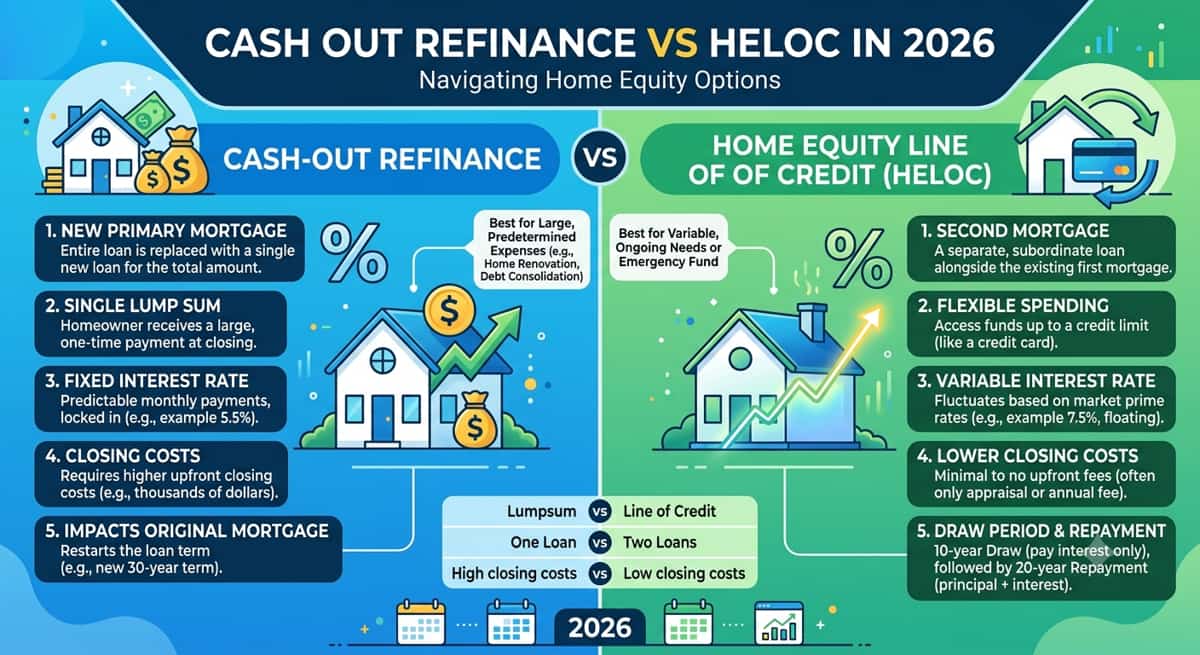
In 2026, choosing between a cash-out refinance and a HELOC depends on your current mortgage rate. A cash-out refinance replaces your mortgage with a new, fixed-rate lump sum, while a HELOC acts as a variable-rate second loan, preserving your existing low rate with lower upfront closing costs.

Mortgage Pre-Qualification Checklist: What to Prepare
June 21, 2026
14 min read
Mortgage

Mortgage Pre-Qualification Checklist: What to Prepare

Mortgage pre-qualification is a fast, low-stress financial health check that estimates your borrowing power without affecting your credit. To ensure a smooth process for purchasing, refinancing, or accessing home equity, organize five core items: proof of identity, income verification, asset statements, two years of employment history, and a debt overview.

Home Equity Loans vs. HELOCs: Which Is Right for You?
June 20, 2026
13 min read
Home EquityHELOC

Home Equity Loans vs. HELOCs: Which Is Right for You?

Homeowners sitting on elevated equity can choose between two primary tools: a fixed-rate home equity loan, which provides a lump sum with predictable monthly payments for defined, one-time expenses, or a variable-rate HELOC, which offers a flexible, credit-card-like line of credit ideal for ongoing or phased projects. Both use your home as collateral.