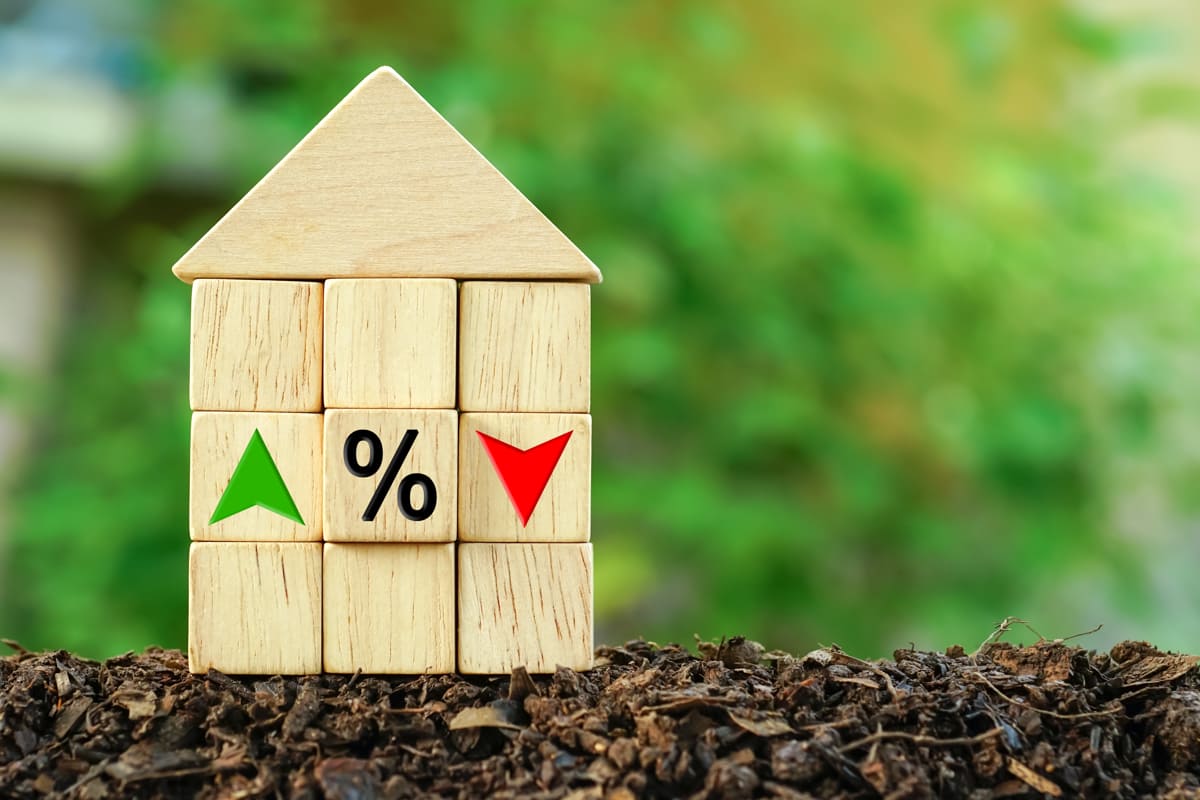
When you start thinking about buying a home or using your home’s equity, it can feel like the market is constantly changing. A big part of that is the relationship between interest rates and home prices. Usually, when interest rates go up, home prices tend to slow down or face pressure to come down. This is called an inverse relationship.
So, do home prices drop when interest rates rise? Not always right away but they often stop rising as quickly. Think of interest rates as the cost of borrowing money. When borrowing becomes more expensive, fewer buyers can afford higher monthly payments. That means less competition, fewer bidding wars, and sellers may need to lower their asking prices or be more flexible. It may not cause a market crash, but it often gives buyers more negotiating power.
In the 2026 housing market, the market has shown how quickly things can change, which can feel overwhelming. That’s why working with a trusted mortgage advisor can make a big difference. A good advisor helps you understand what’s happening beyond the headlines and shows how these changes affect your local market. Whether you want to buy your first home or refinance your current one, understanding how rates and prices work together helps you make smarter, more confident decisions.
How Do Interest Rates Affect How Much Home You Can Afford?
When interest rates go up, your monthly mortgage payment increases which means you can afford a less expensive home for the same budget. When rates drop, your buying power grows, and you can afford more.
Interest rates quietly control how much house your paycheck can actually buy. Think of them as a hidden dial when the dial turns up, your options shrink; when it turns down, your money stretches further.
Most South Asian families start house hunting with a target price in mind, say, $450,000. But banks don't just look at the sale price. They look at what you can comfortably pay every month, based on your income and existing bills. This is called your debt-to-income ratio (DTI) in plain terms, it answers: "After covering your regular expenses, how much is left for a home payment?"
Interest rates directly change that monthly number, even when the home price stays the same.
The Real Cost of a 1% Rate Change
Here's a simple, real-life example. You're looking at a $450,000 home:
At 6% interest, your monthly payment (principal + interest) is around $2,698
At 7% interest, that same home now costs you about $2,994 per month
That's $296 more every month for the exact same house.
Over one year, that adds up to over $3,500 extra out of your pocket. For many families, that difference is what separates a home with a backyard from staying in a two-bedroom apartment often for years longer than planned.
Buying Now vs. Waiting for Rates to Drop
This is one of the most common dilemmas and the honest answer is: it depends on your situation.
Here's how most buyers think about it:
Wait for rates to fall: This sounds smart, but there's a real risk. When rates do drop, thousands of other buyers who were also waiting rush back into the market at the same time. That surge in demand can push home prices even higher, wiping out the savings you were hoping for.
Buy now before rates rise further: Some families feel pressure to act quickly before payments climb more. The concern here is locking in at an uncomfortable price but the upside is building equity sooner and avoiding rising rents in the meantime.
Neither choice is wrong. The right move usually depends on your life right now:
Are you outgrowing your current home or apartment?
Is your rent going up faster than a mortgage payment would?
Is your family expanding and in need of more space soon?
Once you understand that interest rates control your buying power, not just the home's price tag it becomes easier to stop chasing the "perfect time" and start focusing on the right payment for your family's real budget.
Why Home Prices Stay High Even When Interest Rates Rise
Higher rates push some buyers out of the market, but home prices don't crash because most homeowners refuse to sell. They'd lose the low rates they locked in years ago. Less supply keeps prices firm, even when fewer people can afford to buy.
In a straightforward world, when something becomes more expensive to finance, the price should drop to attract buyers. But the U.S. housing market in 2026 doesn't follow that simple rule. High rates do slow things down but they also create an unusual standoff between buyers and sellers that keeps prices from falling the way many people expect.
Fewer Buyers Can Afford to Enter the Market
When interest rates climb, a large group of buyers, especially first-time buyers get priced out. This is called demand suppression, and here's what it looks like in real life:
A South Asian family that was pre-approved for a $450,000 home at a 5% rate may only qualify for $380,000 if rates jump to 7%. That $70,000 difference can knock an entire neighborhood or the extra bedroom they needed out of reach.
With fewer families able to buy, sellers have a smaller pool of qualified buyers. In most markets, that would push prices down. But in today's housing market, something else is happening on the supply side.
Most Homeowners Are Holding On and Not Selling
Here's the part that surprises many buyers: even with fewer buyers in the market, prices aren't dropping because there are also very few homes available for sale.
Most homeowners bought or refinanced in 2021 or 2022, when rates were as low as 3% or 4%. If they sell today and buy a new home, they'd have to swap that low rate for a 2026 rate of 6% or 7%. For most families, that simply doesn't make financial sense so they stay put.
This is known as the lock-in effect, and it has pushed the number of homes listed for sale to historic lows. When supply stays low, prices stay firm even if demand has cooled.
Today's Market in Context — It Has Been Harder Before
It's easy to feel like 2026 is the hardest time in history to buy a home. A little perspective helps:
Early 1980s: Mortgage rates peaked at over 18%. Home prices were far lower, but borrowing was brutally expensive for an entire generation of buyers.
Late 2023: Rates spiked to nearly 8% a sharp shock after years of record lows that many buyers had grown used to.
2026 today: Rates have settled into what economists consider a historically normal range around the mid-6% mark. But because home prices have grown significantly over the past two decades, the combination feels more painful than what our parents experienced when they bought their first homes.
The key takeaway: this is not a 2008-style bubble about to burst. It's a tight, cautious market where both buyers and sellers are holding their ground and waiting for conditions to shift. For South Asian families building long-term wealth in the U.S., waiting for a dramatic price crash may mean waiting for a very long time while a well-planned equity strategy could be a smarter and faster path forward.
Why Falling Interest Rates Often Push Home Prices Higher ?
When interest rates drop, monthly payments get cheaper but that savings rarely lasts. Lower rates bring a flood of buyers back into the market all at once, triggering bidding wars that drive home prices up, often canceling out what you saved on the rate.
It sounds like straightforward good news: rates go down, so your mortgage payment shrinks. And on paper, that's true. But in the real world, falling rates work more like a starting pistol the moment they drop, everyone who was sitting on the sidelines rushes in at the same time, and the competition that follows can quickly push prices up.
Lower Rates Bring More Buyers — and More Competition
Even a half-percentage-point drop in rates can qualify millions of additional families for a mortgage they couldn't afford before. A home that sat with no offers for weeks can suddenly have five competing buyers by the weekend.
This is what brings back bidding wars. In many 2026 neighborhoods, the monthly savings from a lower interest rate simply gets absorbed into a higher purchase price because buyers are outbidding each other to win the home. The math works out to roughly the same monthly payment, just at a higher price tag.
When Borrowing Gets Cheaper, Homes Get More Expensive
When rates fall, real estate becomes one of the biggest winners of what economists call "cheap money." Both everyday buyers and investors are willing to pay more for a property because the long-term cost of the loan feels more manageable. This pushes home values higher even though the house itself hasn't changed one bit.
For South Asian families trying to build equity and enter homeownership, this pattern matters. The window between "rates just dropped" and "prices just jumped" can be very short.
The First-Time Buyer Trap When Rates Fall
Many first-time buyers think: "I'll just wait until rates hit 5% then I'll buy." It's a logical thought, but there's a real risk hiding in it.
If thousands of other buyers are waiting for that same number, the surge in demand when rates finally hit that level can push prices up faster than most families can save for a down payment.
Here's a concrete example: a $400,000 home bought at a 7% rate could actually cost less over time than that same home priced at $460,000 with a 5% rate because the price jumped when everyone rushed back in.
There's a principle worth remembering here: you can refinance your rate later, but you can never refinance your purchase price. Buying during a higher-rate period often means less competition, a lower sale price, and the realistic option to refinance when rates eventually ease.
Rate Drops Are Only Half the Affordability Picture
Understanding this pattern changes how you approach your home search. A low rate is not automatically a good deal if the price has already been bid up by the time you're ready to buy.
The full picture of affordability includes both the interest rate and what you actually paid for the home. For South Asian families making one of the largest financial decisions of their lives in the U.S., keeping both sides of that equation in view is what leads to a genuinely smart purchase, not just one that looks attractive on a monthly payment calculator.
How Do Interest Rates Change the Value of What You "Truly Own"?
Your home equity is the portion of your house you actually own the market value minus what you still owe the bank. Interest rates act like a speed regulator: high rates can slow down your equity growth by cooling home prices, while also making home equity loans more expensive to pay back.
Many homeowners think of equity as just the "price" of their home, but that’s only half the story. To find your true wealth, you have to look at the gap between what the market says your home is worth and the balance left on your mortgage. Interest rates are the invisible force that can either widen or shrink that gap.
Understanding the Equity Growth Engine
When interest rates stay low for a long time, home prices tend to rise quickly. This creates fast equity growth. You might wake up and find your home is worth $50,000 more than last year simply because the market is hot.
However, when rates are high, we often see "equity erosion" or stagnation. Because high rates make it harder for the next person to buy your home, the market value might stay flat for a few years. If you were counting on your home value skyrocketing to fund a renovation or retirement, high interest rates can act like a "speed bump" on that plan.
The Importance of Your Loan-to-Value (LTV) Ratio
When we talk about your equity, we often look at your Loan-to-Value (LTV) ratio. This is just a way of saying: "How much of the house does the bank own versus how much do you own?"
If your home is worth $500,000 and you owe $400,000, your LTV is 80%.
If interest rates cause home prices to dip slightly and your home value drops to $450,000, your LTV jumps to 88%.
Even though you didn't spend any extra money, you now have less "available" equity if you wanted to borrow against it or sell.
The Hidden Trap: HELOCs and Rising Rates
If you already have a Home Equity Line of Credit (HELOC), interest rates affect you much more directly than someone with a standard fixed mortgage. Most HELOCs have "variable rates," meaning they are tied to the Federal Reserve's decisions.
When the Fed raises rates, your HELOC payment usually goes up the very next month. This is a significant variable-rate debt risk. Many homeowners in 2026 are finding that the "affordable" $200-a-month interest-only payment they had two years ago has doubled to $400 or more.
Why This Matters for Your Financial Health
Equity is your safety net. It’s the money you can use for college tuition, emergency repairs, or as a down payment for your next move. By keeping an eye on interest rates, you can decide when to "lock in" a fixed rate or when to pay down your principal faster to protect your stake in the property. Understanding this relationship ensures you aren't just a "renter from the bank," but a savvy owner building real, long-term wealth.
When Is the Right Time to Refinance Your Home?
Refinancing isn't just about finding a lower number; it’s about making a move that pays for itself. Whether you're lowering your monthly bill or pulling out cash for a major project, the goal is to ensure your long-term savings are bigger than the cost of the new loan.
In a market where rates seem to go up and down like a rollercoaster, knowing when to "hit the button" on a refinance can feel like a guessing game. However, refinancing is actually a very practical tool that serves two main purposes: saving you money every month or giving you a lump sum of cash when you need it most.
Choosing Your Strategy: Lower Payments vs. Using Your Equity
There are two main ways to approach this:
Rate-and-Term Refinance: This is the most common path. You are simply trading your current mortgage for a new one with a better interest rate or a different length (like moving from a 30-year to a 15-year loan). The goal here is usually to lower that monthly overhead so you have more breathing room in your family budget.
Cash-Out Refinance: If your home has gained value, you can replace your mortgage with a larger one and take the difference in cash. This is a popular move for families in 2026 looking to pay off high-interest credit cards or finally tackle that kitchen remodel. Because mortgage interest is often much lower than credit card interest, this can be a smart way to simplify your debt.
Doing the "Break-Even" Math
Refinancing isn’t free, there are closing costs involved. To see if it’s worth it, you need to find your Break-Even Point.
Imagine a refinance costs you $4,000 in fees, but it saves you $200 a month on your payment.
$4,000 ÷ $200 = 20 months.
If you plan on staying in your home for more than 20 months, the refinance is a winning move. If you think you might move in a year, you’d actually be losing money. Always look at how long you plan to keep the keys before signing the paperwork.
The "Marry the House, Date the Rate" Philosophy
You might have heard this phrase recently, and it’s especially relevant today. It means you should find the home that fits your life now (marry the house), even if the interest rate isn't perfect. You aren't stuck with that interest rate forever (dating the rate).
If you find the right home at a fair price, you can buy it today and refinance later when rates eventually dip. This prevents you from being "priced out" of a neighborhood while you wait for the "perfect" economic moment that might never come. As your advisor, I’m here to help you monitor the market so that when that dip happens, we’re ready to jump on it together.
What Should Homeowners Watch in the 2026 Market?
2026 is becoming the year of the "rebalanced market." Experts expect home prices to stay steady or grow very modestly (around 2%), while mortgage rates are projected to hover in the low 6% range, finally giving buyer incomes a chance to catch up with housing costs.
Predicting the housing market can feel like trying to predict the weather, but there are a few "economic wind vanes" that tell us which way the market is blowing. As we move through 2026, the focus has shifted from the "chaos" of previous years to a much steadier, more predictable pace.
The Big Three: Inflation, the Fed, and Jobs
To understand where your home value is going, keep an eye on these three signals:
Inflation Data: This is the primary driver. When inflation stays cool, the Federal Reserve feels more comfortable lowering or holding interest rates steady.
The Fed's Announcements: While they don't set mortgage rates directly, their "target range" (currently around 3.5% to 3.75%) sets the floor for what banks charge you.
Employment Rates: A strong job market means people can afford to move. If people feel secure in their paychecks, they are more likely to apply for that refinance or home equity loan.
The "Two-Speed" Market: Sunbelt vs. Midwest
Interestingly, the 2026 market isn't hitting everyone the same way. We are seeing a "two-speed" trend:
The Midwest & Northeast: These areas (like Illinois and Wisconsin) are seeing some of the strongest growth, often above 3% or 4%. Why? Because they stayed relatively affordable while other places spiked.
The Sunbelt & West: Regions like Florida, Texas, and Arizona, which saw massive price jumps during the pandemic years, are now "cooling off." In some of these areas, prices are staying flat or even dipping slightly as they rebalance.
What the Experts are Saying
According to data from the Case-Shiller Index and the FHFA (Federal Housing Finance Agency), national home price growth has slowed to a more sustainable 1% to 2% annual gain. Most major groups, like the National Association of Realtors (NAR), expect this "slow and steady" trend to continue.
For you, this means the risk of a "market crash" is very low. Instead, we are entering a phase where your home is likely to maintain its value while affordability slowly improves for everyone. It’s a great time to be a homeowner, but a time to be strategic rather than impulsive.
What Is the Best Move for Your Home and Your Wallet?
Don't let the headlines freeze your plans. The best time to make a move is when your finances are ready and the math makes sense for your family, regardless of what the broader market is doing.
We’ve covered a lot of ground, from the way interest rates act like a seesaw with home prices to how your equity serves as your personal financial safety net. If there is one "final verdict" for 2026, it is this: Time in the market is almost always better than trying to time the market.
Waiting for the "perfect" interest rate or a "bottom" in home prices often means missing out on years of memories and the steady growth of equity that comes with homeownership. The most successful homeowners are those who focus on what they can control their budget, their long-term goals, and their specific needs today. Whether rates go up, down, or stay exactly where they are, your home remains one of your most powerful tools for building stability and wealth.
Ready to See Where You Stand?
You don't have to figure this out alone. Every home and every neighborhood is different, and your financial situation is unique.
Let’s take the guesswork out of your next move. I invite you to reach out for a personalized equity assessment. We can sit down virtually or in person to look at your current mortgage, your home’s 2026 value, and your goals. Whether you want to lower your monthly payment, tap into your equity for a big project, or find a new place to call home, I’m here to help you move forward with confidence.